nedeľa 15. januára 2012
Brand Leaders
A brand leader commands the largest profit margins, of a given market. The brand is then most widely sold and has the most recognized product in a particular market segment. Brand leaders are specific to their group, for example, Coca Cola is a perfect example of a brand leader in the beverage market. Not only do they know that they hold most sales of all of the competitors, as brand leader they receive a lot of perks.Coca Cola has very high customer loyalty. Being a the most popular, and quality product ensures that the customers keep coming back for more.
Being a brand leader can be signal of quality too. For example, Louis Vuitton is currently the leader among luxury goods. Being a brand leader of this sort shows different advantages such post might hold. Louis V, being a brand leader receives a lot of free publicity. Of course, it is particularly the commercials that help earn the post, but after that, people are interested in the name, products and the companies actions - it leads to people talking - basically free marketing. The fact that it is a brand name, decreases price sensitivity in a customer. You would not pay $500 for just any bag or pair of shoes, but the fact that it Louis Vuitton makes it seem like a good buy even with the ridiculous price-tag. Such brand is admired, and has a high purchase intent. This means that it can expand. Although it may have been originally bags, now this brand makes belts, scarves, or shoes. The fact that it is a brand leader provides a platform for expanding the product categories.
piatok 25. novembra 2011
Enron: We ask why.
Ken Lay was on the highest position when the company went down, he stated that nothing wrong was done. For him, profit was more important then ethics or morals. Jeff Skilling was the visionary of the company, a man with big ideas. He re-created the industry by creating a new accounting procedure for Enron, which allowed them to speculate on the new deals of the company. They created the image and growth of the company of their deal's worth in the future - the value of greatness over actual value. Andy Fastow was a master at covering up truth for the company. He created fake companies to help hide the downfall of their rule. His work was in structured finance, and played up on people's greed to get money. Cliff Baxter had such trauma from hurting millions of people, that he committed suicide.
| The suicide note, found in the car of Cliff Baxter. |
The company and its leaders were sure good at acting, as they had America convinced that they were smarter then anybody else. They thought they were changing the world, but reflected greed. They wanted to believe their perception was reality, although deep down it was obvious that everything was going horribly wrong on all levels.
In the end, nobody understood how the company made money, and it became clear that it was "all just games". People questioned their accounting methods. Nothing seemed to fit, and everyone on top was acting suspicious. The truth came out, when it was too late to do anything about the inevitable end. The company hit bankruptcy within weeks, and let over 22,000 people that were depending on them down. They could not out-think the system like they wanted to, so the men in charge scrambled to make as much money last minute as they could. They sold billions in stock before the company lost value, and transferred company profits to personal accounts. It was the biggest business scandal of the century. This economic fraud destroyed the market. The innocent employees and shareholders lost everything. Nobody could ever dreame in their worst nightmares that Enron would go down, let alone that fast. They were left without any value or money. Life savings of their shareholders, and retirement founds of their employees (saved in company stock or control) were forever gone. Main men in the game faced serious accusations, and those who did not commit suicide, are bound to spend their days in jail. They lost their dignity, value, respect, and now the whole world looks at them for the example of bad business ethics. Business owners should learn from Enron's downfall as ethics and success should always work hand in hand. They owned the world, but lost their soul in the process. Lost their sense of morality. Their life and great work became the land of illusion. Nobody should ever be such victim to arrogance, intolerance and greed.
It all just leaves you thinking with one; Is it ethical to drain out all money, to exploit people. Is it okay to do something, JUST because you can? I hope that this lesson thought us all that the answer is NO.
nedeľa 20. novembra 2011
Marketing works of Emotions
Is there math behind emotion? Can you measure a kiss? Did you ever wonder how many kisses lead to a marriage? Is there a metric for those magical moments, for human emotion, the very substance for all things great? Those irreplaceable moments where an authentic connection occurs, the one that grows an already deepening relationship.
These are the moments people most covet and equally fear, but this is the exact metric for greatness, brands and people alike. This type of marketing was once thought to not exist in the digital space, but it does. It exists in a big way.
An online store-builder company Shopify approached new project. Their benevolent and innovative goal was to create a safe and inspirational digital space for budding entrepreneurs. There wasn't the question of, "For every dollar we spend for a copy of a product, how many new acquisitions will be made?" There wasn't complication behind it, their goal was simple: to build a relationship and to do so through unmatched generosity and education.
The new wave of marketing, with all the talk of likes and tweets, really whittles down to one thing: basic, human connection. It comes down to trust, guidance, and authenticity. "No longer are click-throughs as an isolated metric relevant. The better and perhaps more difficult question to ask is, why would anyone want to talk about you? I'll give you a hint: It isn't because of your latest banner ad." This new method asks people to step out of the box, and make people talk by actions. But is this new approach raising the bar to better standards, or is it on the border line with ethics when it fails?
These are the moments people most covet and equally fear, but this is the exact metric for greatness, brands and people alike. This type of marketing was once thought to not exist in the digital space, but it does. It exists in a big way.
An online store-builder company Shopify approached new project. Their benevolent and innovative goal was to create a safe and inspirational digital space for budding entrepreneurs. There wasn't the question of, "For every dollar we spend for a copy of a product, how many new acquisitions will be made?" There wasn't complication behind it, their goal was simple: to build a relationship and to do so through unmatched generosity and education.
The new wave of marketing, with all the talk of likes and tweets, really whittles down to one thing: basic, human connection. It comes down to trust, guidance, and authenticity. "No longer are click-throughs as an isolated metric relevant. The better and perhaps more difficult question to ask is, why would anyone want to talk about you? I'll give you a hint: It isn't because of your latest banner ad." This new method asks people to step out of the box, and make people talk by actions. But is this new approach raising the bar to better standards, or is it on the border line with ethics when it fails?
sobota 12. novembra 2011
The GOOD, the BAD, & the UGLY.
Corporate Social Responsibility -CSR- is a new trend among businesses. Large companies now commonly claim that CSR is one of their objectives, and that they aren’t in business just for the profits, that they’re also intent on serving some larger social purpose - but we have to wonder; How much of that is actually true? The GOOD, the BAD, and the UGLY, stands for various companies and their level of social responsibility.
The GOOD are the companies that truthfully state, and actually follow CSR. They contribute to their communities, and help make difference in the world. An example of the GOOD would be the famous ice-cream company Ben & Jerry's. Ben & Jerry's is a company that is huge on activism. They help save the environment, and are big on holding up true values. Some of the examples of them actually having corporate social responsibility are the ways they gain ingredients to make their ice-cream. Their milk is bought off of small dairy farms in Vermont, which helps the local farming community of their base town. As well, Ben and Jerry's buys only fair trade products, like coffee, vanilla and cocoa. This way they make sure that the products they use, did not limit someone's rights. As well, they gotten pretty creative over the years, with how they handle their waste. In the beginning, the waste went to a manure pit, then it went to a composting facility , and now they send it to a Methane Bio-digester. This miracle of modern science puts the waste through a biological process that actually creates methane energy for the farmers. And the “cake” solids left over from the digested are then turned into comfy bedding for the cows. Isn't that so much better then piling waste up? 
The BAD are the companies that treat their employees or their communities in a wrong manner, and practice bad business ethics. An example of a BAD company would be Walmart. The company claims that they "Always [have] low prices - Always." But how do you think they can achieve that?? Walmart does not help communities, instead it "helps" destroy them. When Walmart comes into a new town, it ruins all small businesses. People shop there because of their lower prices, but the truth is they achieve those prices by ignoring ethics, and treating people in a unjust way. For example, most of their employees have only a part time job status, as then no health care has to be paid by the company. Walmart uses the system, and tells it's employees to get food stamps, use government aid plans, and basically go on walfare. The employees have no choice then to actually do that, as they do not have any money, because Walmart barely pays them at all ... even if they work more then 40 hours a week. The UGLY are companies that "greenwash" the public.
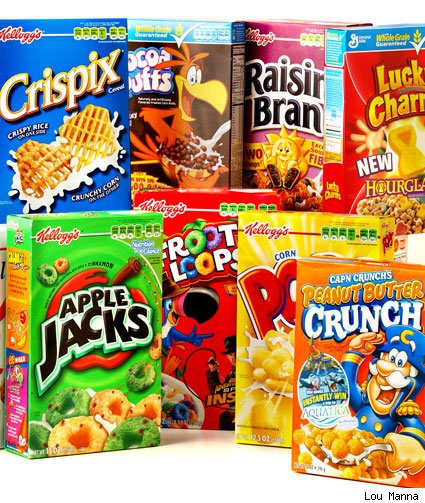
Greenwashing is when a company states that they are practicing CSR techniques, helping the community, and trying to save the environment - but in fact - all the statements are false. They state so only because they feel that it will help them increase their business chances, and earn more profit. A good example of the UGLY would be Kraft Foods. This top producer of foods and beverages in America, has dug itself a hole when their statements about being "all natural" have been proven to be false. Kraft's Cereals have been falsely been promoted for having natural ingredients, when they in fact use genetically engineered corn. The corn that is used in their cereals is made in a lab, and not by nature. The cereal maker's efforts to create a healthy image can have an horrible impact on children, and our health. When Kraft promotes its Natural Advantage cereals as chock full of “antioxidants” and “natural fiber" it seems as a great and healthy choice. However, the cereals also may contain pesticide residue, and modified milk products from cows treated with the rBGH growth hormone.
Next time, do not be fooled by a companies big talk. Help eliminate those BAD and UGLY competitors off the market, and research the brands that you trusted until now. We live in days when we have to rely on our selves for almost anything.
The GOOD are the companies that truthfully state, and actually follow CSR. They contribute to their communities, and help make difference in the world. An example of the GOOD would be the famous ice-cream company Ben & Jerry's. Ben & Jerry's is a company that is huge on activism. They help save the environment, and are big on holding up true values. Some of the examples of them actually having corporate social responsibility are the ways they gain ingredients to make their ice-cream. Their milk is bought off of small dairy farms in Vermont, which helps the local farming community of their base town. As well, Ben and Jerry's buys only fair trade products, like coffee, vanilla and cocoa. This way they make sure that the products they use, did not limit someone's rights. As well, they gotten pretty creative over the years, with how they handle their waste. In the beginning, the waste went to a manure pit, then it went to a composting facility , and now they send it to a Methane Bio-digester. This miracle of modern science puts the waste through a biological process that actually creates methane energy for the farmers. And the “cake” solids left over from the digested are then turned into comfy bedding for the cows. Isn't that so much better then piling waste up? The BAD are the companies that treat their employees or their communities in a wrong manner, and practice bad business ethics. An example of a BAD company would be Walmart. The company claims that they "Always [have] low prices - Always." But how do you think they can achieve that?? Walmart does not help communities, instead it "helps" destroy them. When Walmart comes into a new town, it ruins all small businesses. People shop there because of their lower prices, but the truth is they achieve those prices by ignoring ethics, and treating people in a unjust way. For example, most of their employees have only a part time job status, as then no health care has to be paid by the company. Walmart uses the system, and tells it's employees to get food stamps, use government aid plans, and basically go on walfare. The employees have no choice then to actually do that, as they do not have any money, because Walmart barely pays them at all ... even if they work more then 40 hours a week. The UGLY are companies that "greenwash" the public.
Next time, do not be fooled by a companies big talk. Help eliminate those BAD and UGLY competitors off the market, and research the brands that you trusted until now. We live in days when we have to rely on our selves for almost anything.
pondelok 7. novembra 2011
How business can bloom even now...
New York City is a place that never sleeps - could it be because of all the coffee shops lurking around?


Most of the recent growth in the New York high-end coffee market can be traced back to Starbucks. New Yorkers were getting used to the idea of sophisticated coffee before the company opened, wanting to offer more then just regular watery "diner" coffee, and a "regular" cup from the street carts, who's taste is blocked out by sugar and milk. Starbucks saturated the market with its opening in 1994, planning to have 100 stores in Manhattan within four years. Today, there are nearly 200 Starbucks shops on that little "island". It created a huge market of consumers who no longer tolerated "bad coffee" - but it also drove many smaller chains out of business. However, that is quickly changing in today's economy. Today, Small coffee chains, benefit from lower retail rents and the created bottomless thirst for high-end coffee even in weaker economy, and are taking the opportunity to expand in New York City. The higher rates of unemployment, that came out of this weak market, forced many people to find their entrepreneurial spirit and start something on their own.
The lower rents that came out of it, made a lot of the shop owners feel like they needed to open up. As well, landlords became more flexible about considering food service businesses and new businesses as tenants — In a softer economy, landlords have a little bit less say in that area.
One interesting company that comes out of this whole mess is Pudge Knucles, a start-up roasting facility in Red Hook. They plant to become a chain, and even aspire for a dozen shops. This company takes pride in its NYC herritage, and names their coffees names like "East Coast Thriller" and "Five Borough Blend". Their aim is to provide an unpretentious alternative to overly "sophisticated" coffee chains. And even though more creative and determined coffee shops seems to be filling the market, there is plenty of room for competition.


Most of the recent growth in the New York high-end coffee market can be traced back to Starbucks. New Yorkers were getting used to the idea of sophisticated coffee before the company opened, wanting to offer more then just regular watery "diner" coffee, and a "regular" cup from the street carts, who's taste is blocked out by sugar and milk. Starbucks saturated the market with its opening in 1994, planning to have 100 stores in Manhattan within four years. Today, there are nearly 200 Starbucks shops on that little "island". It created a huge market of consumers who no longer tolerated "bad coffee" - but it also drove many smaller chains out of business. However, that is quickly changing in today's economy. Today, Small coffee chains, benefit from lower retail rents and the created bottomless thirst for high-end coffee even in weaker economy, and are taking the opportunity to expand in New York City. The higher rates of unemployment, that came out of this weak market, forced many people to find their entrepreneurial spirit and start something on their own.
The lower rents that came out of it, made a lot of the shop owners feel like they needed to open up. As well, landlords became more flexible about considering food service businesses and new businesses as tenants — In a softer economy, landlords have a little bit less say in that area.
One interesting company that comes out of this whole mess is Pudge Knucles, a start-up roasting facility in Red Hook. They plant to become a chain, and even aspire for a dozen shops. This company takes pride in its NYC herritage, and names their coffees names like "East Coast Thriller" and "Five Borough Blend". Their aim is to provide an unpretentious alternative to overly "sophisticated" coffee chains. And even though more creative and determined coffee shops seems to be filling the market, there is plenty of room for competition.
“I would say there’s really no place in Manhattan where you’re not going to find a competitor,” said Shelton Franklin, a senior managing director at S. Blair Partners, a real estate services company “There’s always somebody a block away, but there still seems to be room for more.” - Now that's an interesting idea, a city RUN by coffee.("Fuel for the City That Never Sleeps", by Alison Gregor.)
nedeľa 6. novembra 2011
An angle of Business
Business is part of our everyday life, but often we do not see that we can easily become enslaved in its demands. It is hard to get money, not meaning earning enough for living, but earning enough for luxury, and find the time to enjoy things outside of the business area. As technology and innovations advance in products and care, so do new trends begin in the business sector. Multilevel Marketing is one of these new ideas that we see spreading out all over the globe.
Although not necessarily owning her own business, Jana Lackovicova is her own boss. Her business activity belongs in the tertiary sector, and this new way to make business and money suits her need of time, as well as cash flow. She began this type of business to get out of the role of an Employee, who doesn't make much money, but has enough free time, to get to the role of an "Investor", who has plenty of time and money. Wouldn't you think that this would be the ideal position for everyone? Jana wanted to be independent, and followed the theory of the world famous Robert Kiyosaki, and made a change in her life. Classical business that you run on your is a lot of stress, and you exchange your time, for money, which you invest back into your business. This type of business requires capital, investments, responsibility, taxes, usually spaces you need to continue on with your business,as well as staff, and repeated buying of goods and "ingredients" that you need to make your business run, and be a "business". Multilevel Marketing, which is the type of business activity Jana is involved in, requires no spaces, no staff, no stock, no responsibility, and ultimately - no risk.On the other hand, she needs to keep educating herslef in the area of business, and about the company she "embodies". This type of a "job" requires a great skill in communication, as well as have people skills. To start up, Jana only had to pay 100 Euros, so raising a capital was not a burden, as it usually is with other businesses. Her work is linked with the multinational company Nu Skin, and Jana's business activity is categorized into Wellness - beauty, and anti-aging systems. She learned about Nu Skin in the U.S., as her friend introduced her to this idea. The company has 7S7 learning educating system - which means that she goes to learn about new trends, ideas, and ways, and then educates the people under her.
She says "The hardest part of all this was the decision to leave my previous position as an employee, where I didn't make much money but at least had time, and decided to do something independent."
Her biggest challenge in business is to gain people for it. People who would be interested, who she could present to. She aims to gain and convince the biggest number of people possible, that what she does is right and that they should do it also. Her aim is for them to be happy with it. "My goal is to duplicated my business." she says, "How I was tough by my sponsor, and teach it to the people I am involved with."
Although every business has a lot of competition on the rise, she argues "We are original, and not imitations" and that's what puts them aside and makes them shine. In the firm, there is an ethical code, that guides them on how they should act towards their partners, and clients, how to present themselves, and states what isn't allowed. "For example, we never ask each other how much we gain." Other then being on the good side of the ethics, the company has also a lot of social programs set up. Jana's favorite program helps kids in Malawa, by supporting and giving their parents work in factories, and the kids food when they receive education. With so many innovations and social responsibility the company has on hand, it is no wonder that many people choose to work for with them and become their investors. Over all, it is all about good moves in people's lives that we are hearing about here.

Want to learn more? Visit www.nuskin.com
Although not necessarily owning her own business, Jana Lackovicova is her own boss. Her business activity belongs in the tertiary sector, and this new way to make business and money suits her need of time, as well as cash flow. She began this type of business to get out of the role of an Employee, who doesn't make much money, but has enough free time, to get to the role of an "Investor", who has plenty of time and money. Wouldn't you think that this would be the ideal position for everyone? Jana wanted to be independent, and followed the theory of the world famous Robert Kiyosaki, and made a change in her life. Classical business that you run on your is a lot of stress, and you exchange your time, for money, which you invest back into your business. This type of business requires capital, investments, responsibility, taxes, usually spaces you need to continue on with your business,as well as staff, and repeated buying of goods and "ingredients" that you need to make your business run, and be a "business". Multilevel Marketing, which is the type of business activity Jana is involved in, requires no spaces, no staff, no stock, no responsibility, and ultimately - no risk.On the other hand, she needs to keep educating herslef in the area of business, and about the company she "embodies". This type of a "job" requires a great skill in communication, as well as have people skills. To start up, Jana only had to pay 100 Euros, so raising a capital was not a burden, as it usually is with other businesses. Her work is linked with the multinational company Nu Skin, and Jana's business activity is categorized into Wellness - beauty, and anti-aging systems. She learned about Nu Skin in the U.S., as her friend introduced her to this idea. The company has 7S7 learning educating system - which means that she goes to learn about new trends, ideas, and ways, and then educates the people under her.
Her biggest challenge in business is to gain people for it. People who would be interested, who she could present to. She aims to gain and convince the biggest number of people possible, that what she does is right and that they should do it also. Her aim is for them to be happy with it. "My goal is to duplicated my business." she says, "How I was tough by my sponsor, and teach it to the people I am involved with."
Although every business has a lot of competition on the rise, she argues "We are original, and not imitations" and that's what puts them aside and makes them shine. In the firm, there is an ethical code, that guides them on how they should act towards their partners, and clients, how to present themselves, and states what isn't allowed. "For example, we never ask each other how much we gain." Other then being on the good side of the ethics, the company has also a lot of social programs set up. Jana's favorite program helps kids in Malawa, by supporting and giving their parents work in factories, and the kids food when they receive education. With so many innovations and social responsibility the company has on hand, it is no wonder that many people choose to work for with them and become their investors. Over all, it is all about good moves in people's lives that we are hearing about here.
Want to learn more? Visit www.nuskin.com
Greece faces a referendum
Source: New York Times
How does a country in dept, that gets more in dept, help another country rise from the dept?
Prihlásiť na odber:
Príspevky (Atom)